Since the establishment of the polyphysiological device by John Larson in 1921, the polygraph has been repeatedly advanced. The modern lie detector allows for psychophysiological study, through which is fixed the modification of multiple physiological parameters such as sweat intensity, blood pressure, breathing frequency, heartbeat and others.
The history of a polygraph
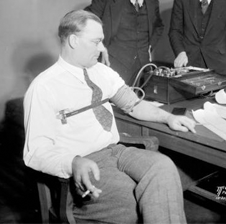 Polygraph from the Greek words poly – many, graph - write, often called "plethysmograph", "variograph," "lie detector" is introduced for the first time in terminology by John Larson, but for lie verification is spoken yet in the primitive social order. The need for lie detecting has emerged since the very moment when people started to come together in groups. Historically, it is known that the various peoples have drawn a variety of special techniques and rituals to recognize lies and expose a liar. Even in those distant times it was observed that people who committed crimes, because of fear of being found, one unwittingly gets different changes in their physiological functions. In ancient China, for example, the suspected in a crime was given dry rice in their mouth. It was believed that if the rice remains dry after hearing the prosecution (from the fear of being exposed a person frequently has a dry mouth) the suspected guilt is proven.
The modern lie detector
 The modern polygraph is a device fixing more than 10 psychophysical parameters. The functioning of the device has been proven through the special "psycho-physiological fenomeen." At its base lies the ability of the human body to respond to external stimuli that carry a proven situationally important information.
The modern polygraph with its proven precision serves as a lie detector, as in many countries polygraph study forms a key part in revealing serious crimes and proving them in court.
When and where a lie detector can be used?
In everyday life it is often necessary to check whether someone is lying. The psychology of lying is such that people often lie unconsciously, lying just for play or to hide someone or something. People often lie if they have committed any offense such as adultery, theft, corruption. Lie detector is used in official controls - for example in the conduct of psychological tests for the Ministry of Interior. Many private investigators recommend searching and finding services for conducting the detection of lies online to solve complex family or business cases.
Lie detector is used extensively in recruitment and admission at a new job position. Thus the subject individuals are checked whether they are spies specially prepared for introduction in the company in order to obtain information about competitors
The price of truth is not high if you turn to the right company with the right polygraph methods. In Bulgaria prices for polygraph studies vary between 100 BGN and 500 BGN. The price depends on the complexity of the case as well as the region and the company to which you have turned for services. Trends show that the services of lie detection in Sofia are the cheapest. In cities such as Stara Zagora, Plovdiv, Varna and Burgas, the psychophysiological tests are more expensive, their prices even go to 800 BGN.
Polygraph is most often used in testing loyalty. Loyalty can be expressed in test for cheating or test of loyalty to a friend, employee, partner. Polygraph is also used with persons tested for gambling. In the Internet there are many tests that can also help to check whether a particular person is dependent on gambling or drugs. Test gambling can be done as you fill in a form that you can do online and then make conclusion if you are dependent.


 A polygraph or lie detector is a device by means of which it is possible to understand the truth about things that a person hides. Polygraph services enable the detection of crime, infidelity, it shows the loyalty of employees and contributes to the protection of one`s honour and dignity.